Chapter 1
The Official Narrative
What your textbooks say about Sabuktigin — and what they deliberately leave out.
What your textbooks say about Sabuktigin — and what they deliberately leave out.
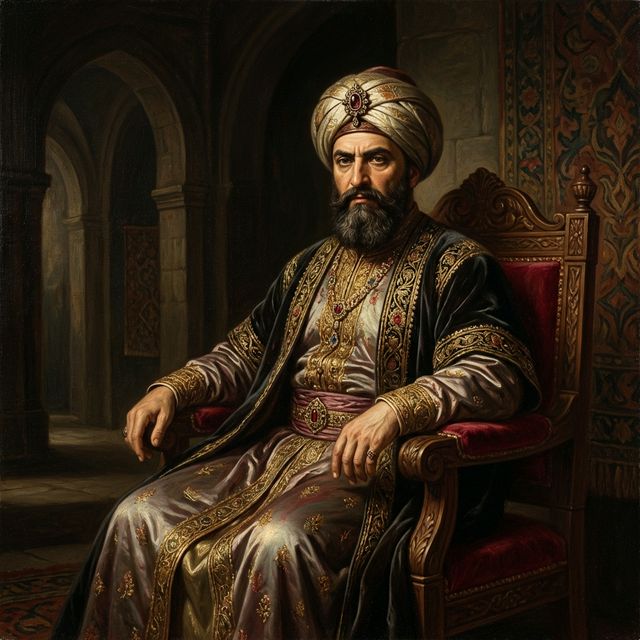
Unlike his son Mahmud of Ghazni, who at least gets a few paragraphs in Indian textbooks, Sabuktigin is virtually absent from Indian school education. Most students graduate without ever hearing his name — yet he is the man who initiated the Ghaznavid invasions of India, established the template of temple destruction and mass enslavement, and directly trained Mahmud in the art of raiding Indian territories.
When textbooks mention the Ghaznavid dynasty at all, they typically begin with Mahmud's 17 raids — as if these campaigns emerged from a vacuum. They did not. Sabuktigin spent two decades systematically dismantling the Hindu Shahi kingdom, destroying temples, and conquering territories that would serve as Mahmud's launchpad.
This deliberate omission is not accidental. By erasing Sabuktigin from the narrative, textbooks deny students the ability to understand the systematic, multi-generational nature of the Ghaznavid assault on India.
The typical Indian school textbook engagement with Sabuktigin is as follows:
Notice what is missing: any mention of his raids into India, his battles against King Jayapala, his destruction of temples and replacement with mosques, the enslavement of Hindu populations, or his role in training his son Mahmud to continue the devastation on a vastly larger scale.
Sabuktigin was born around 942 CE, believed to be of Turkic origin. According to Zayn al-Akhbar by Gardizi, he was captured as a young boy and sold as a slave to Alptigin, the Samanid governor of Khorasan. Through military skill and political cunning, he rose through the ranks. When Alptigin died and his successors proved weak, Sabuktigin seized power in 977 CE, becoming the Amir of Ghazni and founding the dynasty that would devastate India for generations.
Almost immediately after consolidating power, Sabuktigin turned his attention eastward toward the wealthy Hindu Shahi kingdom — a powerful Hindu dynasty that controlled territories from Kabul to the Punjab. This was not a "border skirmish" as textbooks might suggest. It was a deliberate, sustained campaign to conquer Hindu territories, destroy their religious infrastructure, and plunder their wealth. Al-Utbi's Tarikh-i-Yamini documents these campaigns as acts of pious conquest.
One of the most significant early campaigns was Sabuktigin's raid on Laghman (in modern-day eastern Afghanistan), a center of Hindu and Buddhist civilization. According to Gardizi's Zayn al-Akhbar, Sabuktigin destroyed the temples of Laghman and replaced them with mosques. He appointed muezzins and preachers to ensure the Islamization of the conquered territory was permanent. This was not an isolated incident — it was a deliberate policy of religious replacement.
Around 986–987 CE, the Hindu Shahi king Jayapala assembled a massive army to push back against Sabuktigin's encroachments. The two forces clashed at Laghman. According to multiple chronicles, a sudden severe snowstorm devastated Jayapala's army, forcing him to sue for peace. Jayapala agreed to pay tribute and provide hostages — but when he later reneged on the treaty, Sabuktigin launched an even more devastating campaign, conquering all lands between Laghman and Peshawar.
Perhaps the most consequential aspect of Sabuktigin's legacy is that he personally trained his son Mahmud in the art of raiding Indian territories. According to OpIndia's historical documentation citing Al-Utbi, Mahmud destroyed a temple on the banks of the River Sodra (Chenab) under his father's direct command — even before becoming sultan himself. Sabuktigin didn't just conquer — he created a dynasty of conquerors.
The systematic erasure of Sabuktigin from Indian textbooks is part of a broader pattern of historiographical bias documented by scholars like Arun Shourie in Eminent Historians and Sita Ram Goel in Hindu Temples: What Happened to Them.
This erasure operates through several mechanisms:
The erasure of Sabuktigin from Indian education has real consequences for how Indians understand their own civilization.
When textbooks pretend that Mahmud of Ghazni's 17 raids came from nowhere, they deny students the ability to understand the systematic nature of the assault on India. Sabuktigin established the template: raid Hindu territories, destroy temples, build mosques, enslave populations, and use the looted wealth to fund further conquest. Mahmud simply scaled this template to its most devastating level.
Understanding Sabuktigin is understanding the origin story of centuries of destruction. And origins matter — because they reveal patterns, intentions, and systems that a single-event narrative can never capture.
Historical literacy is not about fostering resentment — it is about building informed citizens who understand the forces that shaped their civilization.